New Doors · Woodbridge
High-Lift Garage Door Conversion in Woodbridge
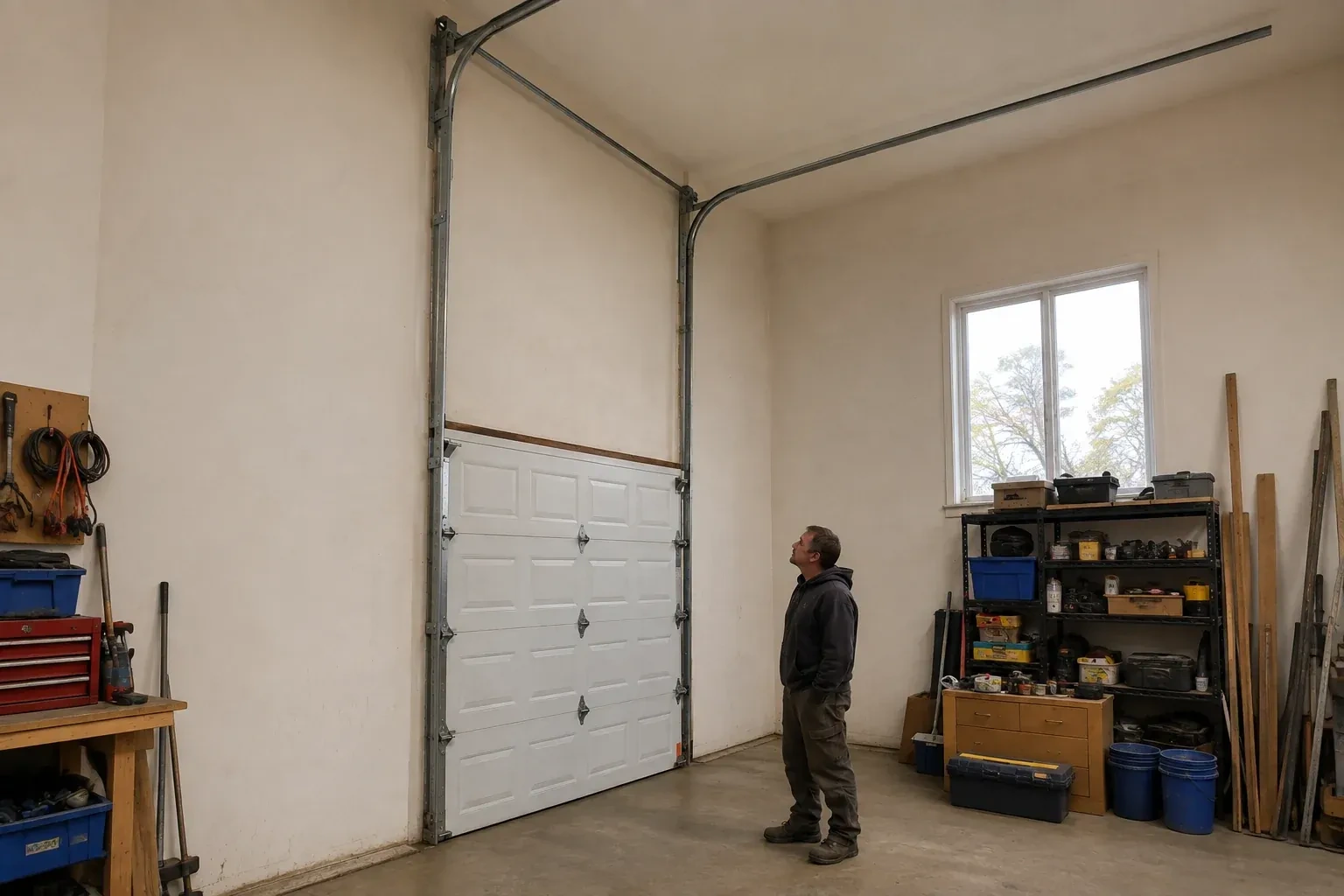
Your new vehicle lift fits the floor plan, but the open garage door crosses the space above it. The ceiling is high enough; the standard track simply turns too soon and leaves the panels hanging over the raised vehicle.
High-Lift Garage Door Conversion
In plain words
The opener deserves as much attention as the track. A common rail-mounted unit occupies the centre of the ceiling and may conflict with both a high-lift path and the space being created. The assessment therefore checks whether the existing operator suits the new geometry or whether another compatible arrangement is needed. Controls, limits and protective devices are then set for the finished travel. Treating operator placement as part of the design keeps the new overhead clearance usable rather than replacing one obstruction with another.
How the visit goesA garage project has reached the measurement stage, and overhead clearance is the deciding detail. The current springs, drums and tracks were built for standard lift, while the intended use calls for additional vertical travel.
Woodbridge
How the visit goes
Distinguish high lift from full vertical lift
The room geometry determines which track family fits. A high-lift door rises an additional distance up the wall and then turns to a horizontal position. A full vertical-lift door continues upward without horizontal track. The technician checks wall height above the opening, usable ceiling depth and the desired open position to confirm which description matches the project. Naming the arrangement correctly matters because drums, tracks, spring placement and support details differ, and the quote should reflect the actual travel path being designed.
Commission the whole converted system
Final work alternates between manual and powered observations. Technicians check that the door stays level, cables remain in their grooves, rollers stay captured, springs clear nearby surfaces and every panel passes through the transition without contact. Manual balance is assessed at several positions, followed by complete powered cycles and safety-function tests. Fasteners, brackets and back hangs receive a final inspection. The installed measurements, component identities, test results and any service notes are then recorded so the conversion closes as one traceable system.
Seasonal observation without adjustment
Temperature and humidity shifts can change lubrication behaviour, door weight and how materials move, while road salt and moisture may reach lower hardware. From a safe position, look for smooth travel, an even bottom edge and cables that remain neatly seated. Listen for a new scrape or repeated contact at the transition. Cleaning accessible track surfaces and following the manufacturer-listed lubrication points supports regular care. Spring, cable, drum and bottom-bracket changes remain technician work because those components carry the counterbalance load.
High-Lift Garage Door Conversion
In the van
- Compatible operator hardware
- Braced back hangs
- End bearing plates
- High-lift cable drums
- Torsion shaft
What affects the quote
Same fees day, night or weekend
1Counterbalance component design
Spring specification, drum profile, cable length, shaft arrangement, bearings and centre supports are calculated around the door and proposed travel rather than priced as isolated pieces.
2Door and equipment preparation
Removing shelves, ceiling finishes or other items from the planned track and service envelope adds coordination when the bay is not ready for installation.
3Electrical coordination
A relocated operator may need a suitable power location or revised control wiring, which is identified separately from the mechanical door scope.
High-Lift Garage Door Conversion: questions
Does cold weather affect a high-lift system?
Cold, moisture and road salt can influence metal surfaces, seals and lubrication just as they do on other garage doors. The taller track path also makes unobstructed movement and correct cable winding important to observe. Follow the installed door and opener manuals for seasonal care, keep lower hardware clean, and arrange service when movement or sound changes noticeably.
Can decorative hardware or added insulation affect the design?
Anything that changes door weight can influence counterbalance selection. Overlay trim, reinforcement, glazing, insulation additions and multiple coating layers are therefore recorded during assessment. If weight is added after conversion, the manual balance should be reviewed. Sharing planned door upgrades early lets the spring, drum and cable design reflect the configuration that will actually be operated.
Why is manual balance checked before powered operation?
The operator is intended to move a properly counterbalanced door, not compensate for an unsuitable spring or drum setup. Manual checks show how the door behaves without motor force and help technicians refine spring adjustment for the finished geometry. Once movement is controlled and consistent, powered commissioning can focus on limits, controls and protective devices rather than masking a mechanical issue.
Installation & Upgrades
- Insulated Steel Garage Door InstallationYour garage is becoming a workshop, but the thin single-skin door rattles, sweats and lets outdoor…
- Wind-Rated Garage Door ReplacementNew windows would improve the door's appearance, but they also change the section layout and…
- Carriage-House Garage Door InstallationA front elevation update has brought new trim, lighting and a deeper colour palette, leaving the…
High-Lift Garage Door Conversion near you
In Woodbridge we work on garage doors of every age and size: single and double residential doors, insulated and uninsulated, wood and steel, plus commercial rolling and sectional doors. The service pages explain the repairs, replacements and installations that apply to each.