Openers · Pine Grove
Belt-Drive Opener Repair in Pine Grove
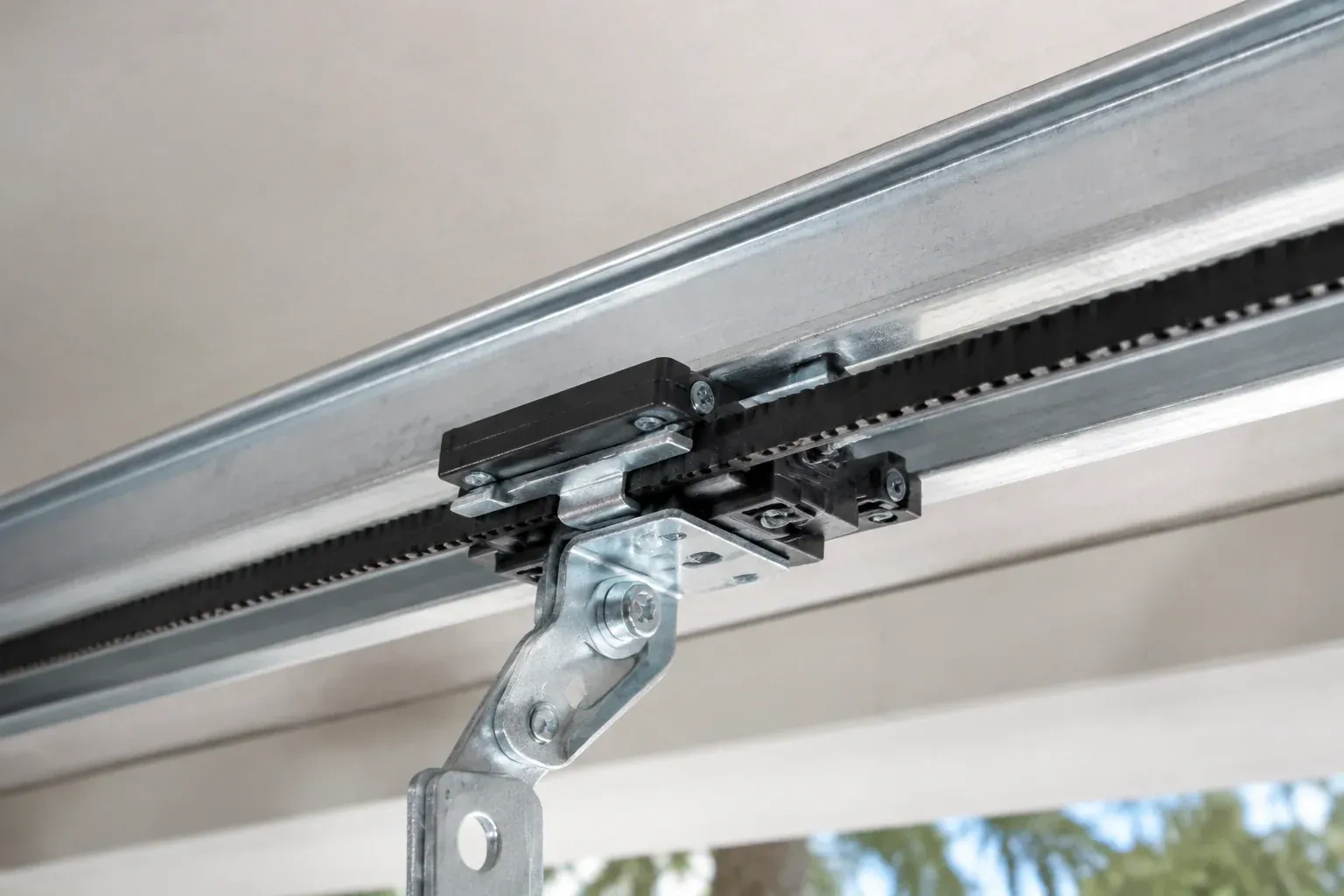
The belt looks fine from a distance, but up close the rubber has cracked across the back in dozens of places and, in one spot, you can see the steel cords showing through.
Belt-Drive Opener Repair
In plain words
A belt drive is chosen for its quiet, so one that has started to rattle is saying something specific. Sprocket noise usually means the belt is either too loose or too tight. A squeal from the front of the rail points to the idler pulley bearing. A clack at the same point in every cycle is a run of worn teeth or a rail joint out of line. A hum with no movement is a broken clip, a stripped gear or a belt off its sprocket. Repair means reading those sounds, confirming them by inspection and replacing the one component responsible, so the operator returns to its hush.
How the visit goesThere is a new squeal from the front of the rail, up near the header, on every cycle. The belt has started tracking to one side and its edge is fuzzy where it has been rubbing.
Pine Grove
How the visit goes
Reading the belt from end to end
With the trolley run to one end of the rail and then the other, the whole length of the belt passes under the technician's eye and fingers, on the top run and the return. What they are looking for is specific: cracks across the back of the rubber, a glazed shine that says the belt has been slipping, an edge gone fuzzy from rubbing, a stretch where the teeth are flattened or torn away, cords showing through, and the state of the clip or link where the belt meets the trolley. Each of these points to a different cause as well as a different repair, and where the wear sits along the belt says a lot about which.
Fitting a new belt
A replacement belt is matched to the rail length and to the tooth pitch of the sprocket, so a belt for a 7 ft door rail differs from one for an 8 ft rail. The old belt is unclipped from the trolley, lifted off the drive sprocket and drawn back around the idler pulley. The new belt is threaded the same way in reverse, teeth toward the sprocket, its ends joined to the trolley shaft with a fresh clip or master link. The technician confirms the belt sits centred on the pulley and in the rail, then tensions the spring to specification. Because the sprocket was bare, the motor and trolley are phased before the door is reconnected.
The two tests you do each month
The repair ends with the reversal tests run in front of you, and they are yours to repeat monthly. With the door fully open, lay a scrap of 2x4 flat on the floor where the door meets it, press the wall control and watch: the door should touch the wood and climb back to the top. Then, with the door closing, pass a broom handle through the beam near the floor; it should reverse the same way. Both take under a minute. If either test ever fails, stop using the operator, work the door by the red cord, and have a trained technician check it; the fault can be the settings, the sensors, the wiring or the opener itself.
Belt-Drive Opener Repair
In the van
- Drive gear and sprocket kit
- Inner and outer trolley
- Rail joint brackets and stop bolts
- Photo-eye sensor pair
- Door arm and clevis pins
What affects the quote
Same fees day, night or weekend
1A second operator on the same property
Where a double garage has two belt drives, or a workshop has its own, both can be looked at in one trip, and the quote shows the two repairs on a single visit.
2When you call
An evening, weekend or holiday visit costs the same amount as a weekday one for a belt-drive repair. The technician looks at the belt, trolley and rail once on site, and the exact figure follows from what is actually found, not from the day of the week.
3Sensors and controls needing attention
Photo eyes out of alignment or too high, a wall control below the recommended height or a release handle out of reach are corrected during the visit and listed separately.
Belt-Drive Opener Repair: questions
Does the trolley need replacing when the belt does?
Not usually. The trolley is checked while the belt is off: its halves should part with the release cord and lock again, the housing should be free of cracks and it should ride the rail without play. A trolley that passes those checks stays and simply receives the new belt and a fresh clip. One that sticks or rattles is replaced in the same visit.
How often should belt tension be checked?
A look every few months is enough: with the door closed and again with it open, the belt should run level with no sag below the rail. A yearly service that checks tension against the spring length, looks at the sprocket and pulley and runs the balance and reversal tests keeps a belt drive quiet for its whole life. Check again after the first hard cold of the winter.
Can I adjust the belt tension myself?
The adjustment nut is reachable and some owners do, but there are two things to get right. The operator must be unplugged and the door released first, and the spring must be set to the maker's length rather than tightened until the sag disappears, since an over-tight belt is noisy and hard on the motor. After any change, the reversal tests should be repeated. Many people prefer to have it done during a service.
Openers & Access
Belt-Drive Opener Repair near you
A door in Pine Grove that is lifting unevenly, dropping too far, screeching on the rails or refusing the remote is telling you which part is tired. Our services are grouped around those parts, springs and cables, tracks and rollers, openers and controls, so the fix is easy to identify.